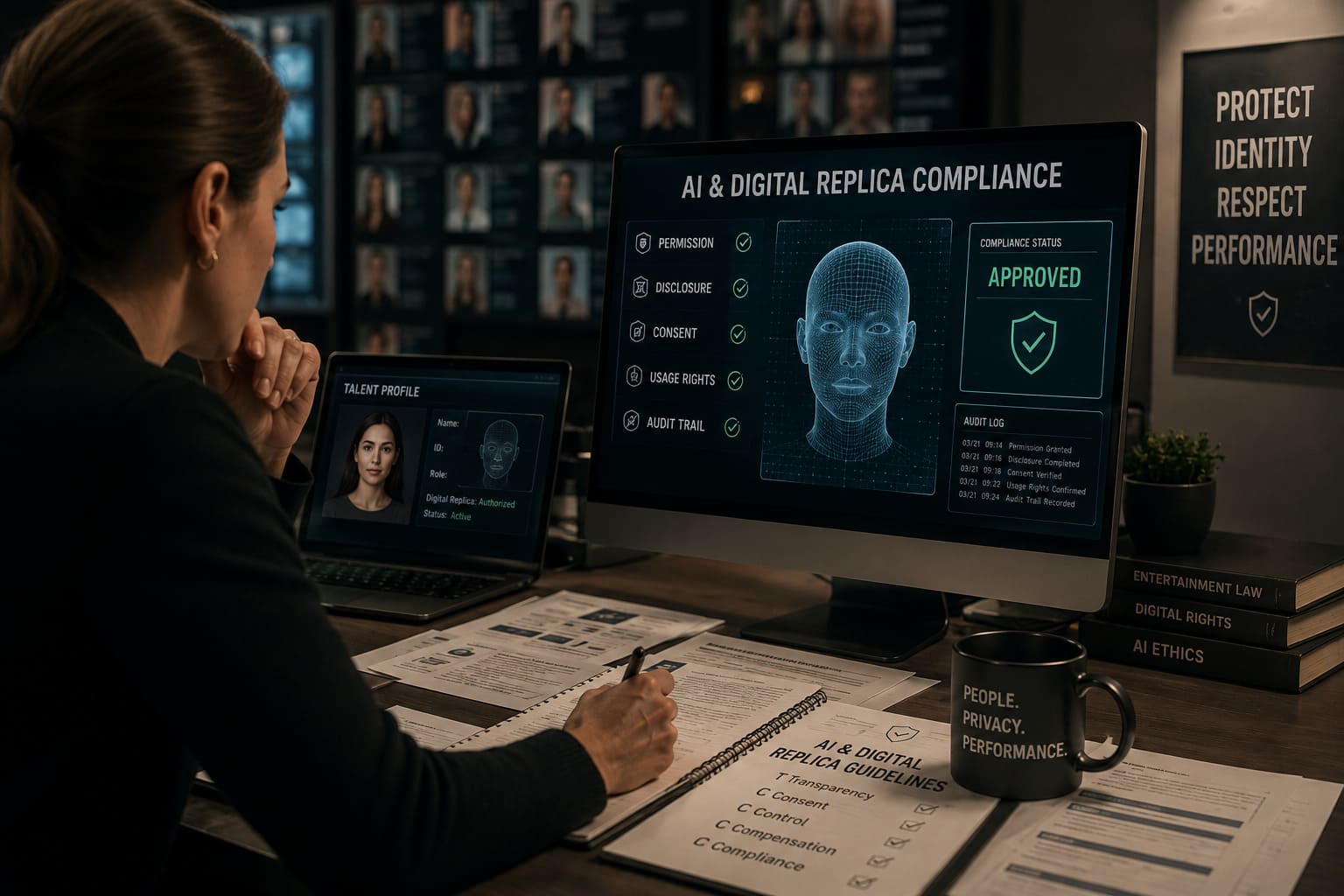
Artificial intelligence is changing nearly every industry, and entertainment is no exception. As AI generated performances, digital replicas, and synthetic voices become more common, protecting performers’ rights has never been more important. New SAG AFTRA agreements, along with evolving state laws surrounding digital likeness and consent, are helping establish clear standards for how a person’s image, voice, and performance can be used.
For casting directors, these changes aren’t just legal updates. They’re part of our everyday responsibility.
Why Digital Consent Matters
When an actor accepts a role, they’re agreeing to perform a specific job under specific terms. With today’s technology, however, it’s possible to digitally alter, recreate, or extend a performance in ways that weren’t imaginable just a few years ago.
That’s why transparency and informed consent have become essential.
Whether a production intends to create a digital double, modify a performance using AI tools, or capture additional data for visual effects, actors deserve to know exactly how their likeness may be used. Clear communication protects everyone involved and builds trust throughout the production process.
The Casting Director’s Role
Casting directors often serve as one of the first points of contact between talent and production. While legal teams ultimately draft contracts and producers make production decisions, casting professionals help ensure everyone is operating with the same understanding from the very beginning.
That means asking the right questions, identifying projects that involve digital capture or AI assisted workflows, and making sure any required disclosures or consent documentation are communicated early in the process.
The goal isn’t simply checking a compliance box. It’s creating an environment where actors can make informed decisions before they ever step onto set.
Staying Current with an Evolving Industry
The legal landscape surrounding AI and digital likeness continues to evolve. New union agreements, state legislation, and industry standards are developing rapidly as technology advances.
Productions that stay informed are better positioned to avoid misunderstandings, reduce legal risk, and maintain positive relationships with performers.
For actors, understanding these protections can provide confidence that their work and their identity are being respected throughout the casting and production process.
Protecting Talent Builds Better Productions
Great casting has always been about more than finding the right performer. It’s about creating professional relationships built on trust, respect, and clear communication.
When actors understand exactly what they’re agreeing to, they can focus on what they do best: delivering authentic, memorable performances. Likewise, producers who prioritize transparency help create smoother productions and stronger partnerships with talent.
At 5309 Casting, we believe protecting performers and supporting our clients go hand in hand. As AI technologies continue to reshape the entertainment industry, we’ll continue staying informed on evolving requirements, promoting transparent communication, and helping productions navigate these changes responsibly.
Technology will continue to evolve. Respect for talent should remain constant.
Leave a Reply