
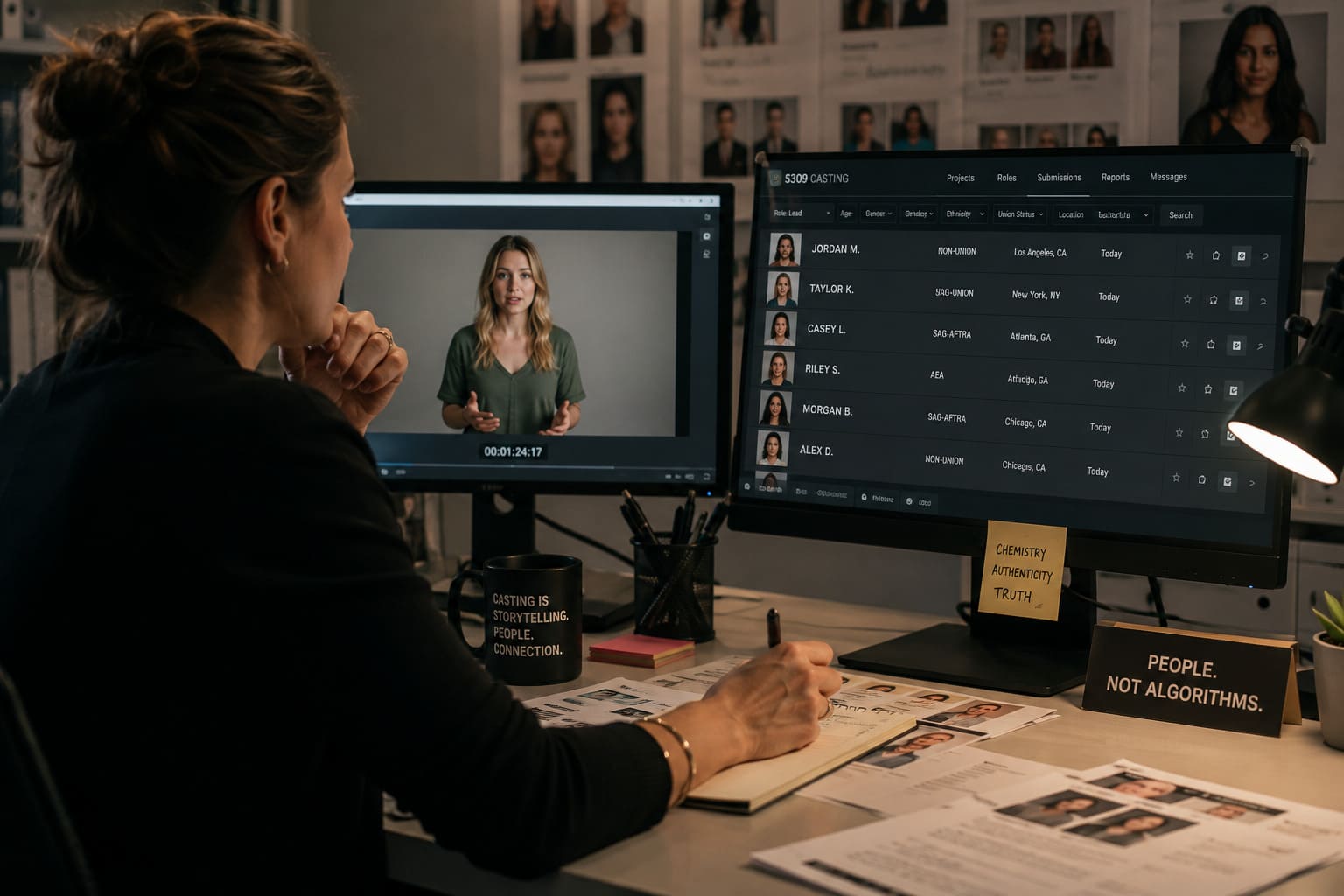
Every actor has probably wondered the same thing at some point: “Is an algorithm deciding whether anyone even watches my self-tape?”
As artificial intelligence becomes a bigger part of everyday business, it’s understandable that performers worry technology is replacing the human side of casting. The reality is much less dramatic.
Technology Is a Tool, Not a Casting Director
In principal casting, technology has become an incredibly valuable organizational tool, but it isn’t casting the role. Behind the scenes, casting offices often manage thousands of submissions for a single project. Smart databases and automation help us organize information, search for specific qualifications, and keep projects moving efficiently.
They help us find the right actors faster. They don’t replace the creative instincts, experience, and collaboration that ultimately determine who gets the callback or the booking.
At 5309 Casting, we believe technology should support the casting process, not control it. AI and automation function as administrative assistants that help us sort, filter, and manage submissions. The actual casting decisions still come down to people: evaluating performances, chemistry, authenticity, and whether someone truly fits the vision of the project.
Your Casting Profile Still Does the Heavy Lifting
One of the biggest ways actors can help themselves in this process is by maintaining a complete, accurate casting profile. Your skills, measurements, union status, special abilities, location, and current headshots all make it easier for casting professionals to find you when searching for very specific role requirements.
Think of your profile as your digital résumé. It isn’t a substitute for your talent, but it helps make sure your talent actually gets seen.
What Only a Human Eye Can Catch
Technology may help us navigate thousands of submissions, but it can’t recognize the spark that happens when an actor brings a character to life. That kind of read still takes experienced casting professionals, directors, and producers in the room (or watching the tape) together.
As the industry continues to evolve, one thing remains unchanged: great performances book roles, not algorithms.
Leave a Reply